Global Economy- Now Ireland On The Brink Of Insolvency
Written by Shirish Sha
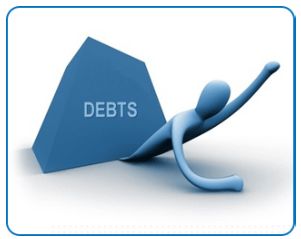 Ireland is on the brink of insolvency too, which has helped drive down the S&P 500 stock index by nearly 4 percent over the last few days. But unlike Greece, Ireland is a relatively wealthy country, with per capita GDP of nearly $38,000. That's 21 percent higher than per capita GDP in Greece, and in the top third for European countries. Low corporate tax rates and a skilled workforce have made Ireland a haven for some of the world's biggest companies. And its public debt, about 65 percent of GDP, is far below Greece's crushing load, which is 126 percent of GDP.
But Ireland has one huge problem that may soon make it a supplicant to its European brethren: A failed banking sector that Ireland's government can no longer rescue on its own. Ireland is in the midst of a real estate bust that could trump even the ruinous downturns that turned parts of southern California and Nevada into suburban ghost towns, with home-grown banks stoking it all. Now, those banks are trying to manage catastrophic losses.That means the Irish government is also on the hook for the losses those banks endure--which have risen far beyond initial estimates, and may have a lot farther to go. So far, the Irish government is obligated to cover losses amounting to 175 percent of Irish GDP, which is becoming an unsustainable burden. Ireland wants the European Central Bank to continue lending money to Irish banks at low interest rates, but the ECB has different ideas. Inflation has been creeping up in Europe, and the central bank said recently that it wants to end its program of pumping liquidity into banks, not continue or expand it. Cutting off those loans to Irish banks could force defaults, which the Irish government would have to cover or essentially be in default itself. Germany, meanwhile, wants to hurry a bailout of Ireland, to prevent worries about sovereign bonds from spreading to Portugual or Spain, which would be a much bigger problem.
RAMIFICATION: A European bailout of Ireland would be manageable, and probably cost less than the Greek rescue. But Ireland doesn't want it, because the EU and IMF would force austerity measures onto the island nation that could effectively end its appeal as a businessfriendly nation with a high standard of living. Since Ireland is wealthier than other European nations that would essentially be lending it money, social programs would end up gutted, and taxes would soar.. And Ireland's 12.5 percent corporate tax rate--one of the lowest in the developed world--would almost certainly go up, taking what's left of the roar out of the Celtic Tiger. If multinational businesses abandon Ireland, it could fall quickly down the list of Europe's most prosperous nations.
What's most likely is some kind of Irish bailout, with tough negotiations over when it happens and the conditions Ireland must agree to. Ireland will fight hard to put off a bailout--at least until parliamentary elections on Nov. 25--and to retain its right to make its own fiscal decisions. But Ireland's luck may be about to run out, with other European nations likely to insist that Ireland face austerity measures at least as tough as those in Greece.
Ireland is on the brink of insolvency too, which has helped drive down the S&P 500 stock index by nearly 4 percent over the last few days. But unlike Greece, Ireland is a relatively wealthy country, with per capita GDP of nearly $38,000. That's 21 percent higher than per capita GDP in Greece, and in the top third for European countries. Low corporate tax rates and a skilled workforce have made Ireland a haven for some of the world's biggest companies. And its public debt, about 65 percent of GDP, is far below Greece's crushing load, which is 126 percent of GDP.
But Ireland has one huge problem that may soon make it a supplicant to its European brethren: A failed banking sector that Ireland's government can no longer rescue on its own. Ireland is in the midst of a real estate bust that could trump even the ruinous downturns that turned parts of southern California and Nevada into suburban ghost towns, with home-grown banks stoking it all. Now, those banks are trying to manage catastrophic losses.That means the Irish government is also on the hook for the losses those banks endure--which have risen far beyond initial estimates, and may have a lot farther to go. So far, the Irish government is obligated to cover losses amounting to 175 percent of Irish GDP, which is becoming an unsustainable burden. Ireland wants the European Central Bank to continue lending money to Irish banks at low interest rates, but the ECB has different ideas. Inflation has been creeping up in Europe, and the central bank said recently that it wants to end its program of pumping liquidity into banks, not continue or expand it. Cutting off those loans to Irish banks could force defaults, which the Irish government would have to cover or essentially be in default itself. Germany, meanwhile, wants to hurry a bailout of Ireland, to prevent worries about sovereign bonds from spreading to Portugual or Spain, which would be a much bigger problem.
RAMIFICATION: A European bailout of Ireland would be manageable, and probably cost less than the Greek rescue. But Ireland doesn't want it, because the EU and IMF would force austerity measures onto the island nation that could effectively end its appeal as a businessfriendly nation with a high standard of living. Since Ireland is wealthier than other European nations that would essentially be lending it money, social programs would end up gutted, and taxes would soar.. And Ireland's 12.5 percent corporate tax rate--one of the lowest in the developed world--would almost certainly go up, taking what's left of the roar out of the Celtic Tiger. If multinational businesses abandon Ireland, it could fall quickly down the list of Europe's most prosperous nations.
What's most likely is some kind of Irish bailout, with tough negotiations over when it happens and the conditions Ireland must agree to. Ireland will fight hard to put off a bailout--at least until parliamentary elections on Nov. 25--and to retain its right to make its own fiscal decisions. But Ireland's luck may be about to run out, with other European nations likely to insist that Ireland face austerity measures at least as tough as those in Greece.

Article author
About the Author
Further reading
Further Reading
Article
The Role of Two-Man Delivery in Modern UK E-commerce
The UK e-commerce industry has changed significantly in recent years. Customers now expect more than simply having their orders arrive on time. For large, heavy, fragile, or high-value products, they increasingly expect a convenient, professional, and reliable delivery experience from the moment their order leaves the
September 13, 2026
Article
E Paper Display Market Size, Share & Growth Analysis 2025–2034
The Global E Paper Display Market is projected to grow from USD 4.3 billion in 2025 to USD 21.3 billion by 2034, expanding at a 19.4% CAGR. Growth is driven by rising adoption of electronic shelf labels, e-readers, smart signage, logistics labels, and low-power connected displays. North America is expected to lead the
September 13, 2026
Article
The Silent Shift: How Appointment Setting is Redefining Home Security Sales
Discover how appointment setting transforms home security sales from cold knocks to trusted consultations, boosting conversions and building lasting customer relationships.
September 12, 2026
Article
Data Warehouse Architecture: Fundamentals for Business Leaders
August 26, 2026