WHAT ARE CLEAR ALIGNERS?
Written by jack bay
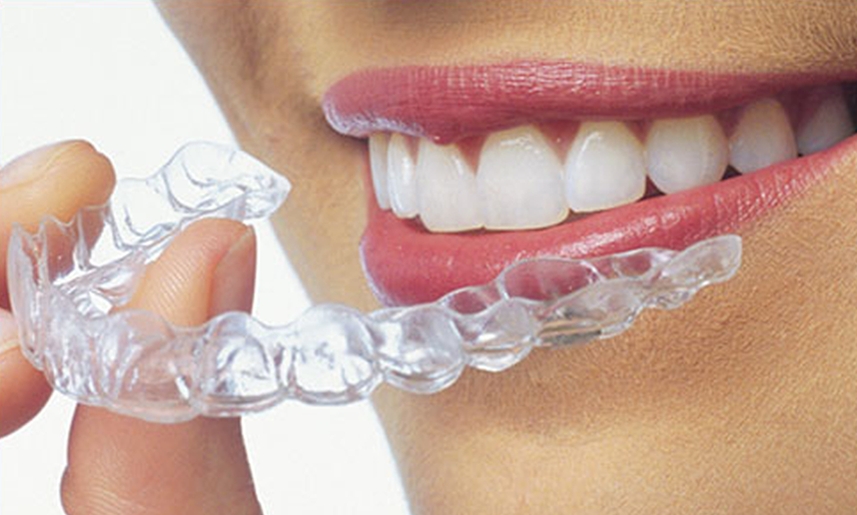
You already know that Invisible Orthodontics works with transparent aligners, plastics that cover the entire surface of the teeth and are tailor-made for each patient to fit like a glove.
Clear aligners are usually made of polyurethane. The SmartTrack is made of thermoplastic polyurethane and copolyester and does not contain Bisphenol A (a substance used in some plastics and resins) so its use is totally safe for health.
The advantages of clear aligners are several: for example, this technology allows better control of tooth movement. These aligners are also capable of exerting a more controlled, but at the same time, more constant force, all with a better adaptation compared to competing aligners.
WHAT ARE CLEAR ALIGNERS FOR?
Clear aligners are used to resolve any type of malocclusion. Exactly the same as with braces, but without the inconvenience of the latter.
In some moments of the treatment, it will be necessary to place composite reliefs called attachments (they are the same colour as the tooth and are imperceptible) that will help the aligners to carry out the necessary movements. The aligners also have the shape of the attachments, so you will see that some have "bubbles". Attachments and transparent aligners form a great team since the combination of both will give us better control of the entire tooth, and not just one point as is the case with braces.
Furthermore, as all treatment is digitally planned and in 3 dimensions, the movement of each tooth is programmed individually, according to the needs of each patient.
WHAT BENEFITS DO THEY HAVE?
The transparent aligners are almost imperceptible and can be put on and taken off, so we can maintain ideal hygiene throughout the treatment and avoid the typical pain, canker sores, wounds and food between braces.
Another of its advantages is that we will not have to stop eating some foods during the invisible orthodontic treatment, you will be able to eat everything! You just have to remove your aligners, eat, brush your teeth (or rinse if you are not at home) and put them back on to continue your treatment without anyone knowing.
In addition, you will not have to go to visit the dentist every month to get "the grip on the irons". Every week you will change your aligner at home, so the movements will be lighter (thus avoiding pain) and you will visit your orthodontist every 6 or 8 weeks to see how your treatment is going.
You can even do it through video consultation! If you live outside of Spain or cannot get close to your ONLINE centre, you can space out your visits even more. This is nice! You will only have to notify your orthodontist, who will plan your treatment and give you more aligners.
And if you are one of those who drink a lot of tea or coffee, don't worry. You can remove the aligners to do this, but nothing happens because you leave them on. They can "catch" a bit of colour, but considering that every 7 days you will have a new aligner, it will practically not have time to appreciate it!
WHO CAN USE THEM?
Clear aligners can be worn by almost… everyone! As they are used to treat any alignment or bite problem, they can be used in children from 6 to 99 years old.
Article author
About the Author
Thanks for reading
Further reading
Further Reading
Article
Fear of Being Healthy?
Why do some people have trouble addressing health concerns?
October 8, 2026
Article
Why General Practice Accreditation Delivers Real Value Beyond Compliance
General practice accreditation is more than a compliance requirement. This article explains how accreditation supports patient safety, quality improvement, practice governance, funding eligibility, and ongoing trust in Australia’s healthcare system.
October 8, 2026
Website
HealthNexo
HealthNexo provides trustworthy, evidence-based health information and the latest health news. We cover disease prevention, diagnosis, nutrition, fitness, and wellness to help you make informed decisions for a healthier life.
October 2, 2026
Article
Dengue Diagnosis: Which Blood Tests Are Used and When?
Dengue diagnosis blood tests include RT-PCR/NAAT, NS1, IgM, IgG, and CBC. Early tests detect the virus, while IgM becomes more useful later. CBC helps monitor the patient but cannot confirm dengue alone.
October 2, 2026