On The Internet! Take the Self Improvement Tour

Dalai Lama

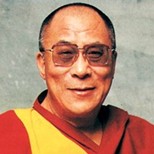
Dalai Lama Quick Facts
Main Areas: Peace; Happiness; Spirituality; Buddhist PhilosophyBest Sellers: “The Art of Happiness”; “Ethics for the New Millennium”
Career Focus: Author; Spiritual Leader
The Dalai Lama is a spiritual and temporal leader of the Tibetan people, known worldwide as a tireless worker for peace. Born Lhamo Dhondrub to a peasant family in 1935, he was recognized at age two, in accordance with Tibetan tradition, as the reincarnation of his predecessor, the 13th Dalai Lama, and an incarnation of Avalokitesvara, the Buddha of Compassion. The Dalai Lamas are the manifestations of the Buddha of Compassion.
In 1950, the Dalai Lama assumed full political power after Tibet was invaded by the People’s Liberation Army. He sought to bring about a peaceful solution to Sino-Tibetan conflict. After a national Tibetan uprising, which was crushed by the Chinese army, the Dalai Lama escaped to India, where he was given political asylum. Tens of thousands of Tibetan refugees followed him into exile. The Dalai Lama saw that he needed to save the Tibetan exiles and their culture alike.
The Dalai Lama appealed to the United Nations on the question of Tibet, resulting in three resolutions adopted by the General Assembly, calling on China to respect the human rights of Tibetans. Since his first visit to the West, he has received numerous peace awards, including the 1989 Nobel Peace Prize, and honorary doctorate degrees for his writings on Buddhist philosophy and his leadership in the solution of international conflicts and global environmental problems.
Other Programs & Highlights
The Dalai Lama began his education at age six and completed the Geshe Lharampa Degree (Doctorate of Buddhist Philosophy) when he was 25. He pursues an ongoing schedule of administrative meetings, private audiences, and religious teachings and ceremonies. Following the life of a Buddhist monk, he lives in a small cottage, rises at 4 a.m. to meditate, and ends each day with further prayer.
Favorite Quotes & Thoughts from Dalai Lama
• In the practice of tolerance, one’s enemy is the best teacher.
• Be kind whenever possible. It is always possible.
• Awareness of death is the very bedrock of the entire path. Until you have developed this awareness, all other practices are obstructed.
• Pain is inevitable. Suffering is optional.
• I believe all suffering is caused by ignorance. People inflict pain on others in the selfish pursuit of their happiness or satisfaction. Yet true happiness comes from a sense of peace and contentment, which in turn must be achieved through the cultivation of altruism, of love and compassion, and elimination of ignorance, selfishness, and greed.
• If you want others to be happy, practice compassion. If you want to be happy, practice compassion.
• Love and compassion are necessities, not luxuries. Without them hu-manity cannot survive.
• My religion is very simple. My religion is kindness.
• Sleep is the best meditation.
• Old friends pass away, new friends appear. It is just like the days. An old day passes, a new day arrives. The important thing is to make it meaningful: a meaningful friend—or a meaningful day.
• Learn the rules well, so you can break them properly.
• You can transplant a heart, but you cannot transplant a warm heart.
Getting Started With Dalai Lama
The best place to get started with the Dalai Lama is to read or listen to The Art of Happiness: A Handbook for Living. Howard C. Cutler, a Western psychia-trist, wanted to find out the secrets of happiness that the Dalai Lama appeared to have inside of him. He was able to set up a series of interviews with the Dalai Lama that became the basis for this book. Dr. Cutler’s goal was to ques-tion the Dalai Lama about a wide variety of topics, gaining insight into how to live a happy life.
Some of the questions that Dr. Cutler poses include:
• Why are so many people unhappy?
• How can I abjure loneliness?
• How can we reduce conflict?
• Is romantic love true love?
• Why do we suffer?
• How should we deal with unfairness and anger?
• How do you handle the death of a loved one?
The Dalai Lama initially provides some simple answers that grow into more involved responses and then evolve into a more complete philosophy for living. He discusses relationships, health, family, work, spirituality, the pursuit of wealth, and how to find inner peace while facing these struggles. He also talks about how to defeat depression, anxiety, anger, and jealousy through medita-tion.
When Dr. Cutler asks the Dalai Lama if he is happy, the answer is yes, and when he asks if he is ever lonely, the answer is no. The Dalai Lama says this is because he always looks at others positively and experiences a “feeling of affinity, a kind of connectedness.” The audio version of this enlightening work is read by Dr. Cutler and Ernest Abuba.
Contacting Dalai Lama
ADDRESS: Tibet House U.S. The Office of Tibet
22 West 15th Street Tibet House, 1 Culworth Street
New York, NY 10011 London NW8 7AF
PHONE: (212) 807-0563 0044-20-7722 5378
WEBSITE: www.dalailama.com www.tibet.com

